
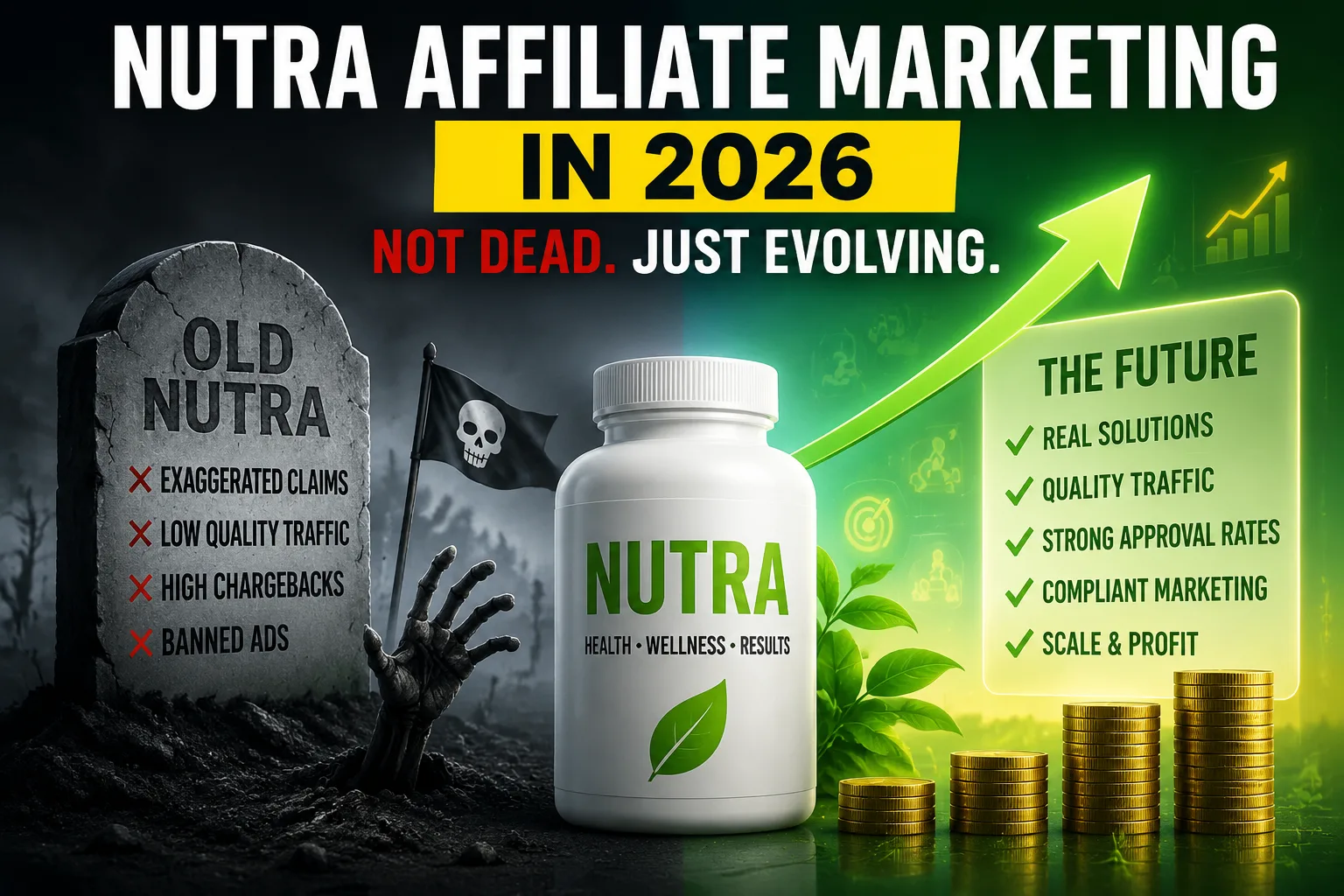
Nutra Affiliate Marketing in 2026: Why the Vertical Is Not Dead — It Just Got Smarter
Nutra affiliate marketing has always been one of the most emotional verticals in performance marketing. People want to lose weight, sleep better, look younger, support their joints, improve energy, or feel more confident. That demand is not disappearing in 2026.
What is changing is the way affiliates, advertisers, and networks make money from nutra offers.
The old model — aggressive promises, low-trust landing pages, and quick traffic tests — is becoming harder to scale. Ad platforms are stricter, users are more skeptical, and advertisers care more about lead quality, approval rate, chargebacks, and long-term profitability.
So, is nutra dying? No. But low-quality nutra is.
This guide explains how the nutra vertical works in 2026, what has changed, which offers still have potential, and how beginners can approach this niche without burning budgets on outdated tactics.
What Nutra Means in Affiliate Marketing
Nutra is a broad affiliate marketing vertical built around health, beauty, wellness, supplements, and personal-care products. It usually includes:
-
weight management products;
-
vitamins and dietary supplements;
-
joint and bone support;
-
skincare and anti-aging solutions;
-
hair, nails, and beauty products;
-
male and female wellness products;
-
sleep, energy, and general wellness offers.
For beginners, the easiest way to understand nutra is this: people buy products that promise to improve how they feel, look, or function in daily life.
That makes nutra highly emotional. A user does not click because they want “a supplement.” They click because they have a problem, insecurity, or goal. Successful campaigns understand this motivation — but in 2026, they must express it carefully and responsibly.
Why Nutra Still Works in 2026
Nutra survives because the demand is stable. Health, appearance, weight, energy, and aging are not seasonal trends — they are long-term human concerns.
However, the market is no longer easy money. Affiliates face more pressure from three sides:
First, users have seen too many exaggerated claims. They no longer trust every “miracle solution” landing page.
Second, platforms like Meta and Google are much more careful with health, body image, and supplement-related advertising.
Third, advertisers now evaluate not only how many leads an affiliate brings, but also how many of those leads are real buyers, how many orders are confirmed, and how many payments turn into refunds or chargebacks.
That is why the future of nutra belongs to affiliates who can bring cleaner traffic, better creatives, realistic messaging, and stronger pre-sale education.
The Real Problem: Not Traffic, but Trust
Many nutra campaigns fail not because the offer is bad, but because the user journey creates distrust.
A typical weak funnel looks like this:
The ad makes a strong promise.
The pre-landing page exaggerates the result.
The landing page pushes urgency.
The user leaves a phone number or pays quickly.
Later, they regret the decision, ignore the call center, cancel the order, or request a refund.
This is where chargebacks and low approval rates become a serious problem. Banks, advertisers, affiliate networks, and payment processors all dislike unstable traffic quality.
In 2026, trust is not a “branding bonus.” It directly affects campaign economics.
A better nutra funnel should answer three questions before asking for a conversion:
-
What problem does the product support?
-
Why should the user believe this offer?
-
What exactly happens after the user submits a request or pays?
The clearer the funnel, the better the chance of confirmed orders and long-term campaign survival.
COD, Straight Sale, and Hybrid Models: What Beginners Should Know
Nutra offers often use different payment models. Understanding them is essential before launching traffic.
COD Offers
COD means Cash on Delivery. The user leaves a request, then a call center contacts them to confirm the order. The affiliate is usually paid only after the lead is validated or the order is confirmed.
COD can work well in regions where people prefer paying after receiving the product. But it also depends heavily on call center quality, delivery speed, and user intent.
If the creative attracts curiosity clicks instead of serious buyers, approval rates can drop fast.
Straight Sale Offers
Straight Sale means the user pays online directly. This model can be cleaner because payment intent is stronger. But it also requires better landing pages, trust signals, payment processing, and refund control.
Straight Sale is usually less forgiving for weak traffic.
Hybrid and Subscription Models
Some advertisers combine upfront payouts with recurring value or performance bonuses. These models can be attractive when the product has repeat purchase potential.
For affiliates, the main question is not only “What is the payout?” but also “Can this offer keep quality after scaling?”
A high payout means little if the approval rate is poor or the advertiser cuts traffic after the first test.
What Nutra Offers Have Potential in 2026
The strongest nutra categories are usually connected to persistent demand, privacy, or visible personal goals.
Weight Management
Weight management remains one of the biggest nutra segments, but it is also one of the most sensitive. Ads must avoid unrealistic body claims, shaming, or promises of guaranteed transformation.
The safer angle is lifestyle support: appetite control, routine, motivation, wellness habits, and balanced progress.
Joint and Mobility Support
Joint support offers often target older audiences or people with physically demanding routines. These campaigns can work well with educational funnels because the problem is practical and easy to understand.
The message should focus on comfort, daily movement, and support — not medical treatment claims.
Beauty and Anti-Aging
Beauty nutra connects well with skincare, collagen, hair care, and appearance-related routines. This category often performs well with visual creatives, UGC-style content, and before-routine/after-routine storytelling.
The key is to sell a realistic beauty habit, not an impossible transformation.
Men’s and Women’s Wellness
These offers often convert because users value privacy. Many people are more comfortable ordering online than discussing sensitive topics offline.
Still, this category requires careful wording. Overly aggressive sexual claims can create moderation issues and low trust.
Sleep, Energy, and Daily Wellness
This segment is easier to connect with content marketing, native ads, and search traffic. Users often look for practical solutions, comparisons, and educational articles before buying.
For SEO affiliates, these sub-niches can be especially useful because they allow informational content, product roundups, and long-tail keyword targeting.
GEO Strategy: Where Nutra Campaigns Can Still Scale
Nutra is global, but the same approach does not work everywhere.
Tier-1 countries can offer strong purchasing power, but they usually have stricter regulations, higher traffic costs, and tougher platform moderation. Campaigns need cleaner claims, stronger compliance, and better brand presentation.
Tier-2 and Tier-3 markets can offer cheaper traffic and high demand for COD offers. However, affiliates must pay close attention to localization, call center quality, delivery infrastructure, and payment habits.
A practical GEO checklist for nutra in 2026:
-
Is the product legal and compliant in this market?
-
Does the audience trust online purchases?
-
Is COD popular, or do users prefer card payments?
-
Are landing pages localized properly?
-
Does the call center speak the local language naturally?
-
Are delivery times short enough to protect approval rates?
-
Does the advertiser have stable stock and fulfillment?
For beginners, it is better to test one GEO deeply than to launch the same funnel across ten countries without localization.
Traffic Sources That Make Sense for Nutra
There is no universal “best” traffic source for nutra. The right choice depends on the offer, GEO, compliance level, funnel type, and budget.
Native Advertising
Native ads are useful for educational angles, story-based pre-landers, product comparisons, and long-form advertorials. They work well when the user needs context before converting.
This source is often a good match for joint support, beauty, wellness, and daily health routines.
Push and Pop Traffic
Push and pop traffic can still be used for fast testing, especially in lower-cost GEOs. But traffic quality must be monitored carefully.
These sources can generate volume, but not every click has strong buying intent. Affiliates should watch approval rate, call center feedback, and lead validity — not just CTR.
Meta and TikTok
Social traffic can work when creatives look native, simple, and human. UGC-style videos, short explanations, and realistic lifestyle hooks often perform better than aggressive banners.
The risk is moderation. Health, body image, and supplement ads must avoid personal attributes, shame-based messaging, and medical-style promises.
SEO and Content Traffic
SEO is slower but more stable. It works especially well for affiliates who can build trust through reviews, guides, comparisons, and educational content.
Examples of useful content formats:
-
“best supplements for daily energy”;
-
“how to choose a joint support product”;
-
“collagen supplements vs skincare routine”;
-
“what to check before buying weight management supplements”;
-
“COD vs online payment for nutra products.”
SEO traffic usually requires more patience, but it can produce higher-intent users and reduce dependence on paid ad volatility.
Creatives in 2026: Less Shock, More Context
Old nutra creatives often relied on shock, fear, or unrealistic transformation. In 2026, that approach is risky and unstable.
Better creatives usually do three things:
They show a relatable situation.
They explain the product category simply.
They create curiosity without making dangerous promises.
For example, instead of saying:
“Lose 15 kg fast without effort.”
A safer angle would be:
“Why many people add appetite-support supplements to their weight management routine.”
Instead of:
“Cure joint pain forever.”
A better version would be:
“Daily joint support: what to look for before choosing a supplement.”
This shift may look less aggressive, but it usually creates a more qualified user. Qualified users are more likely to confirm orders, pay, and stay satisfied.
Metrics That Matter More Than Payout
Beginners often choose nutra offers by payout size. That is a mistake.
A $90 payout with weak approval can be worse than a $35 payout with stable confirmation and low refund rates.
The important metrics are:
-
conversion rate;
-
approval rate;
-
EPC;
-
refund or chargeback rate;
-
call center confirmation speed;
-
average delivery time;
-
cap stability;
-
advertiser feedback;
-
repeat purchase potential.
The best affiliates think like advertisers. They do not only ask, “How much can I earn per lead?” They ask, “Can this traffic remain profitable for everyone in the chain?”
That mindset helps build stronger relationships with CPA networks and advertisers.
Compliance Is Now a Competitive Advantage
Nutra marketing is closely connected to health-related claims. That means affiliates must be careful with promises, visuals, testimonials, and landing page wording.
A practical compliance-first approach includes:
-
avoiding cure, treatment, or guaranteed-result claims;
-
using softer support-based language;
-
not shaming the user’s body or health condition;
-
avoiding fake doctors, fake reviews, and fake news formats;
-
adding clear product information;
-
matching the ad message with the landing page;
-
checking local rules before launching in a new GEO.
Compliance does not mean boring marketing. It means building campaigns that can survive longer, scale cleaner, and avoid constant bans or payment problems.
In 2026, the affiliates who understand compliance often have an advantage over those who only chase short-term loopholes.
Practical Launch Framework for Beginners
If you are new to nutra affiliate marketing, do not start with a huge budget or a complicated funnel.
Use a simple testing framework:
Step 1: Pick One Sub-Niche
Choose one category, such as joint support, skincare, or daily energy. Do not test everything at once.
Step 2: Choose One GEO
Focus on localization, language, user habits, and payment behavior.
Step 3: Study the Offer
Before launching, ask the network or advertiser:
-
What is the average approval rate?
-
Which traffic sources are allowed?
-
What claims are prohibited?
-
What creatives are already working?
-
How fast does the call center process leads?
-
Are there caps or quality requirements?
Step 4: Build Several Angles
Test different motivations:
-
educational;
-
emotional;
-
lifestyle;
-
problem-aware;
-
comparison-based;
-
routine-based.
Step 5: Optimize by Quality, Not Only CTR
A high CTR can be dangerous if it brings low-intent users. Watch lead quality, approval, and advertiser feedback from the beginning.
Step 6: Scale Only After Validation
Do not scale because one creative gets clicks. Scale when the full funnel proves that traffic converts into real confirmed value.
Conclusion: Nutra Is Becoming a Quality Game
Nutra affiliate marketing is not dead in 2026. It is simply becoming more professional.
The vertical still has strong demand, many sub-niches, global GEO opportunities, and multiple traffic sources. But success now depends less on aggressive promises and more on trust, compliance, localization, funnel quality, and real user intent.
A practical example:
Instead of launching a generic “miracle weight loss” offer with a shocking creative, a smarter affiliate in 2026 might build a localized content funnel around weight management habits, compare supplement options, use compliant support-based language, and send warmer users to a COD or Straight Sale offer.
That approach may look slower at first. But it creates better leads, fewer refunds, stronger advertiser relationships, and more stable profit.
The future of nutra belongs to affiliates who stop treating users as clicks — and start treating them as customers.